Propulsion technologies for drones and small unmanned aerial vehicles (UAVs) are evolving rapidly, offering a wide range of opportunities to enhance performance, endurance, and environmental sustainability. Fully electric propulsion, powered by lithium-based batteries, is currently the most common approach due to its simplicity, low noise, and minimal emissions. These systems are well-suited for short-range missions and consumer drones. Fuel cells, particularly hydrogen fuel cells, are gaining traction for their higher energy density and longer flight durations compared to batteries. They provide a cleaner alternative to internal combustion (IC) engines and offer the potential for extended missions in surveillance, mapping, and delivery services. Meanwhile, traditional IC engines remain valuable in scenarios requiring high power-to-weight ratios, quick refueling, and rugged operational environments.
Despite these promising developments, each propulsion technology presents significant challenges. Electric systems are limited by battery energy density, which constrains flight time and payload capacity. Fuel cells, while offering longer endurance, require complex onboard storage solutions for hydrogen, along with careful thermal and water management. IC engines, though mature and reliable, generate noise and emissions, making them less suitable for urban or environmentally sensitive missions. Additionally, integrating propulsion systems into compact airframes while optimizing for weight, efficiency, and reliability remains a critical engineering hurdle. Continued research and innovation are needed to overcome these barriers and enable flexible, mission-specific propulsion solutions for the growing UAV market.
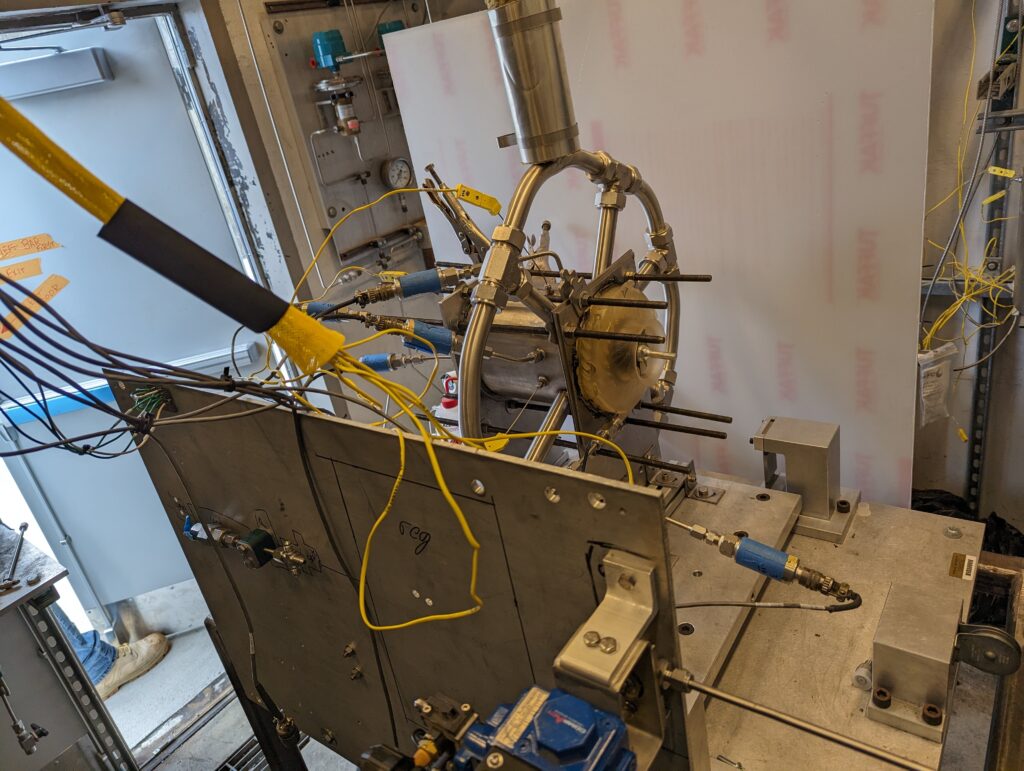
The students in AAE 535 Propulsion DBT course designed, built and tested this micro gas turbine burning hydrogen: